
Latin America Security Risk Intelligence Brief: Organized Crime, Sanctions, Infrastructure Risk, and Political Volatility
Secrisk International’s July 2026 Latin America security risk intelligence brief analyzes organized crime, sanctions exposure, fuel smuggling, illegal mining, political instability, infrastructure disruption, cyber risk, and regional security developments across LATAM and the Caribbean.
Secrisk Team
Security intelligence publication
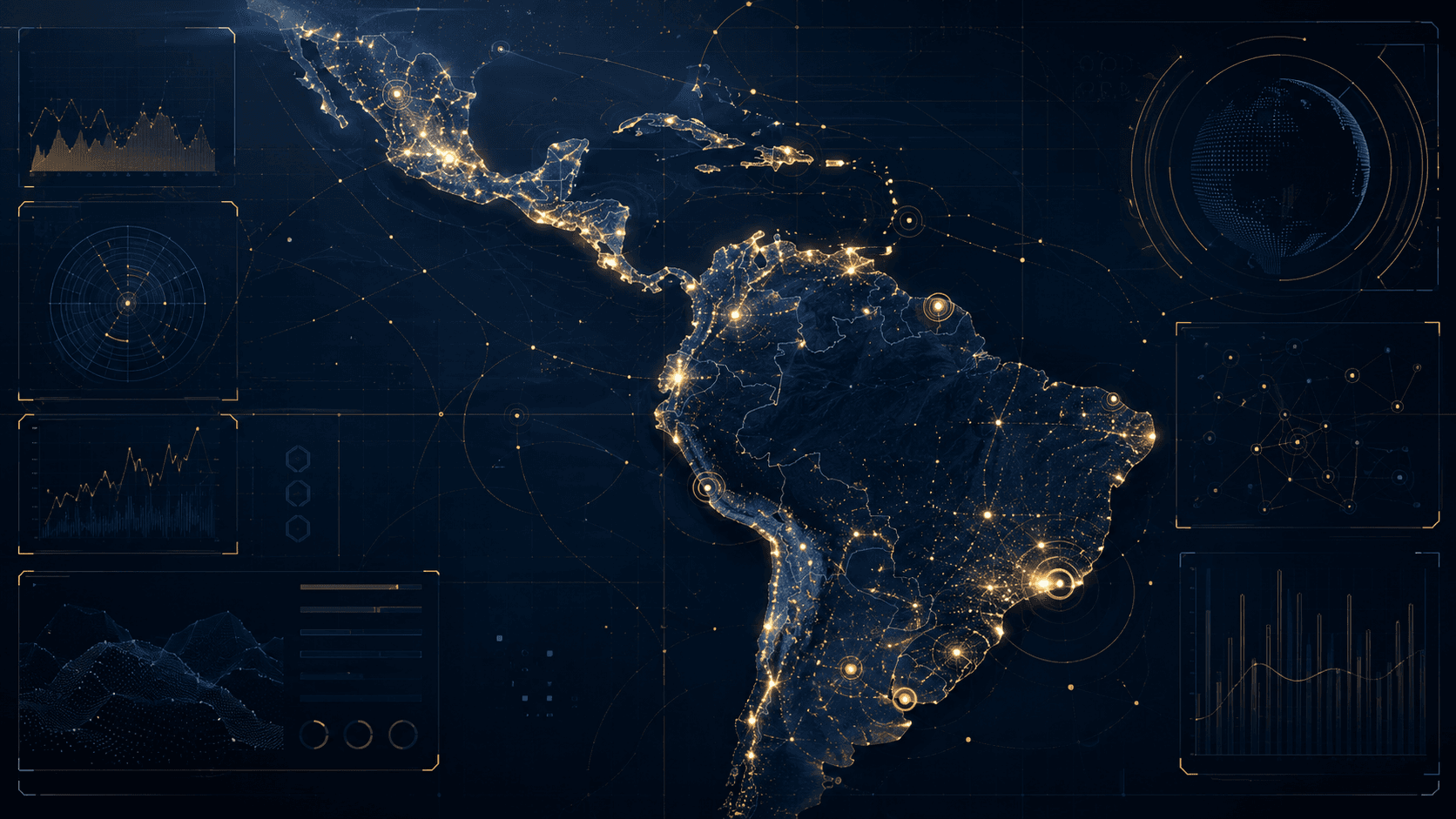
Latin America Security Risk Intelligence Brief: Organized Crime, Sanctions, Infrastructure Risk, and Political Volatility
Latin America and the Caribbean are entering a more complex regional risk cycle shaped by transnational organized crime, political instability, sanctions exposure, infrastructure fragility, cyber-enabled financial crime, and disaster-related governance stress.
This Secrisk International LATAM Security Risk Intelligence Brief provides regional threat analysis for corporate security teams, executive protection planners, financial institutions, insurers, infrastructure operators, commodity traders, logistics providers, multinational companies, and investors with exposure across Latin America and the Caribbean.
Regional Risk Overview
The most significant trend this week is the regional securitization of organized crime. Criminal networks are increasingly being treated not only as law enforcement problems, but as strategic threats affecting financial systems, trade, extractives, logistics, fuel markets, agriculture, and state stability.
From Haiti’s Gang Repression Force roadmap to U.S. terrorist designations targeting criminal organizations in Ecuador, Brazil, and Mexico, governments are expanding the use of counterterrorism tools, sanctions, security cooperation, and regional intelligence-sharing frameworks to confront organized crime.
For companies operating in the region, this means risk exposure is becoming more operational, more financial, and more compliance-driven.
Organized Crime as a Strategic Business Risk
Criminal groups across Latin America are expanding beyond drug trafficking into fuel smuggling, illegal mining, agriculture, logistics, ports, transportation, real estate, and financial systems.
This trend creates direct exposure for companies that may not consider themselves to be operating in traditionally high-risk sectors. Businesses may face extortion, supply-chain disruption, sanctions exposure, reputational damage, insurance risk, and criminal infiltration through vendors, intermediaries, transport providers, fuel suppliers, or commodity channels.
Companies with exposure to Mexico, Brazil, Colombia, Ecuador, Peru, and Venezuela should treat organized crime as an enterprise risk issue, not only a physical security concern.
Sanctions, Terrorist Designations, and Compliance Expansion
The United States is increasingly using sanctions and terrorist designations against Latin American criminal organizations. This creates expanded compliance obligations for banks, insurers, commodity traders, logistics companies, investors, and businesses with cross-border exposure.
Recent developments involving groups such as CJNG in Mexico, PCC and Comando Vermelho in Brazil, the Chone Killers in Ecuador, and other illicit networks show how criminal organizations are being tied to financial crime, fuel markets, illegal mining, logistics, and money laundering.
Organizations should reassess sanctions screening, beneficial ownership reviews, transaction monitoring, customer due diligence, third-party risk, and correspondent banking exposure. This is especially important for companies operating in or doing business with Mexico, Brazil, Ecuador, Venezuela, and high-risk commodity chains.
Mexico: Fuel Smuggling and Cartel Financial Networks
Mexico remains a key market to monitor due to cartel expansion into fuel smuggling and financial laundering. U.S. authorities have identified cartel-linked fuel smuggling as a major revenue source, with criminal networks using shell companies, fraudulent invoices, mislabeled shipments, and cross-border financial transactions.
The Jalisco New Generation Cartel has been linked to fuel theft, transportation, financial services, and real estate exposure. This creates risk for companies involved in fuel distribution, logistics, banking, trade finance, transportation, insurance, and cross-border commerce.
For businesses, the main concern is not only security violence. It is the possibility that legitimate supply chains, vendors, invoices, and counterparties may be contaminated by cartel-linked activity.
Brazil: Criminal-Terror Designations and Financial Sector Risk
Brazil has pushed back against U.S. designations of Primeiro Comando da Capital and Comando Vermelho as Foreign Terrorist Organizations, warning that the move could create sovereignty concerns and legal exposure for Brazilian citizens and businesses.
At the same time, the designations significantly expand compliance risk for U.S. financial institutions and businesses with exposure to Brazil. The impact may include asset-blocking obligations, material-support concerns, enhanced anti-money laundering expectations, suspicious activity reporting, and increased scrutiny of sectors allegedly vulnerable to criminal infiltration.
Sectors requiring particular attention include fuel, logistics, agribusiness, mining, ports, fintech, real estate, and cross-border finance.
Colombia: Political Transition Risk and Armed-Group Recalibration
Colombia’s presidential transition has entered a period of heightened volatility. The president-elect suspended transition meetings with the outgoing administration and accused the government of attempting to undermine the election result. Opposition figures have also signaled civil disobedience and public mobilization.
At the same time, Colombia’s incoming administration has pledged to dismantle the previous “Total Peace” policy and pursue a tougher security strategy against armed groups.
This creates several risk factors: protest activity, political polarization, security-policy reversal, uncertainty for investors, and possible recalibration by armed groups. Companies operating in Colombia should monitor the August 7 transfer of power, protest activity, security deployments, and any changes affecting rural areas, transport corridors, extractives, agriculture, and executive travel.
Colombia’s Magdalena banana region also highlights the direct impact of organized crime on agricultural exports. Armed groups have reportedly disrupted production, threatened workers, and demanded extortion payments from producers.
Venezuela: Earthquake Recovery and Governance Stress
Venezuela’s earthquake recovery has become a major humanitarian, infrastructure, and political-risk issue. The disaster has caused significant casualties, displacement, building damage, and pressure on emergency response systems.
As international rescue teams withdraw and operations shift toward debris clearance and humanitarian assistance, the response may expose governance gaps, infrastructure limitations, and political tensions. Opposition leaders have also raised concerns about access, air travel restrictions, and humanitarian coordination.
For organizations operating in or near Venezuela, key concerns include airport operations, humanitarian access, communications, logistics, healthcare capacity, fuel availability, public frustration, and security-force activity.
Cuba: Blackouts and Critical Infrastructure Fragility
Cuba continues to face severe energy instability after another nationwide blackout, adding to repeated power disruptions since late 2024. The outages have affected transportation, healthcare, communications, food systems, water access, and business operations.
Cuba’s energy crisis is not only an economic issue. It is a business continuity, humanitarian, and social stability risk. Companies, NGOs, travelers, and regional operators should prepare for recurring disruptions, limited fuel availability, weak communications, and constrained emergency response capacity.
Ecuador: Gang Designations and Illegal Mining Pressure
Ecuador remains a high-risk environment due to gang violence, U.S. terrorist designations, and growing pressure around illegal mining. The U.S. designation of the Chone Killers gang as a Foreign Terrorist Organization and Specially Designated Global Terrorist group reflects Washington’s increasing use of counterterrorism tools against Latin American criminal groups.
Separately, a suspected bomb attack damaged Ecuador’s mining regulator in Quito, following intensified enforcement against illegal gold mining. This indicates that criminal groups tied to illegal mining may retaliate against government, regulatory, or security targets.
Companies exposed to Ecuador’s mining, logistics, security, government contracting, and infrastructure sectors should review site security, counterparty risk, emergency planning, and movement protocols.
Peru: Illegal Mining and Resource-Sector Conflict
Illegal mining continues to fuel conflicts in Peru and threatens communities, water resources, ecosystems, and cultural heritage sites, including areas around the Nazca Lines. The issue has evolved beyond a traditional environmental or regulatory problem into a governance and security challenge.
Illegal mining networks often lack formal leadership, making negotiation and enforcement more difficult. They may also be connected to organized crime, money laundering, and violence.
Companies connected to gold, minerals, logistics, fuel, security services, or regional transportation should strengthen due diligence and supply-chain traceability.
Haiti: Security Force Roadmap and Critical Infrastructure Risk
Haiti remains one of the highest-risk markets in the region. The Gang Repression Force has presented a roadmap focused on dismantling gang control, securing critical infrastructure, and strengthening the Haitian National Police and Armed Forces of Haiti through September 2028.
The mission is expected to prioritize key departments before expanding nationwide. However, even with expanded security operations, full stabilization remains unlikely in the near term.
Businesses, NGOs, and infrastructure stakeholders should monitor security deployments, humanitarian access, port and airport security, road access, and the operational footprint of armed groups.
Cyber Risk: Latin American Banking Malware Expands
Cyber-enabled financial crime is becoming an increasingly important regional risk. The Brazilian banking trojan Ousaban has expanded beyond Brazil to target online banking customers in Spain and Portugal through phishing, fake documents, geofencing, VPN detection, sandbox evasion, keylogging, screenshots, remote access, and fake banking screens.
This shows that Latin American cybercriminal techniques continue to evolve and expand internationally. Banks, fintech companies, executives, and high-net-worth individuals should review phishing defenses, endpoint protection, credential security, transaction monitoring, and remote-access controls.
Regional Security Coordination
Latin American governments are increasingly seeking coordinated responses to organized crime. Uruguay and Chile have agreed to strengthen cooperation against transnational organized crime, while Mercosur leaders have called for a regional security architecture focused on intelligence sharing, border management, arms trafficking, illicit financial flows, and police coordination.
This trend may improve enforcement cooperation, but it may also increase regulatory scrutiny, information-sharing, and compliance expectations for companies operating across borders.
Key Markets to Watch
Haiti remains critical due to gang control, weak institutions, humanitarian access challenges, and the gradual deployment of security operations.
Colombia remains high risk due to political transition tensions, possible protests, policy reversal, and armed-group recalibration.
Venezuela remains high risk due to earthquake recovery, humanitarian access challenges, infrastructure disruption, and political confrontation.
Cuba remains high risk due to repeated blackouts, fuel shortages, infrastructure weakness, and social stress.
Mexico remains elevated due to cartel fuel smuggling, sanctions exposure, and illicit financial networks.
Brazil remains elevated due to criminal-terror designations, compliance exposure, and sovereignty tensions.
Ecuador remains high risk due to gang designations, illegal mining, retaliatory violence, and attacks linked to enforcement activity.
Recommended Client Actions
Companies with exposure to Latin America and the Caribbean should consider the following immediate actions:
Conduct enhanced sanctions and counterparty screening across Mexico, Brazil, Ecuador, Venezuela, and high-risk commodity chains.
Review supply-chain exposure to illegal mining, fuel smuggling, extortion, criminal taxation, and illicit logistics networks.
Reassess business continuity plans for blackouts, fuel shortages, communications outages, airport disruption, civil unrest, cyber fraud, and emergency evacuations.
Update executive travel protocols for Colombia, Haiti, Ecuador, Venezuela, and high-crime border regions.
Strengthen crisis monitoring around Colombia’s transition, Venezuela’s earthquake recovery, Haiti’s security-force deployment, and Cuba’s power instability.
Review cyber defenses for banking fraud, credential theft, phishing, remote-access compromise, and executive-targeted financial scams.
Engage local security intelligence support before expanding operations in high-risk corridors, extractive zones, port environments, or politically volatile markets.
Bottom Line
The Latin America and Caribbean risk environment is not uniformly deteriorating, but it is becoming more complex. Political instability, criminal diversification, infrastructure fragility, sanctions pressure, cyber-enabled fraud, and strategic competition are increasingly interconnected.
Businesses should not wait for direct disruption before acting. The current environment favors proactive intelligence monitoring, enhanced due diligence, executive protection reviews, supply-chain traceability, sanctions compliance, and business continuity planning.
Secrisk International will continue monitoring developments across Latin America and the Caribbean with attention to how these events may affect corporate security, executive protection, critical infrastructure, financial institutions, travel risk, supply chains, and regional operations.
Disclaimer: This article is based on open-source reporting and regional news monitoring. It is provided for informational and risk-awareness purposes only and does not constitute legal, financial, investment, or political advice.