
LATAM Security Brief: Haiti, Venezuela, Uruguay, Colombia, and Regional Organized Crime Trends
A Secrisk regional intelligence brief covering key Latin America and Caribbean security developments, including Haiti’s gang crisis, Venezuela’s earthquake response, Uruguay’s drone policing model, and organized crime trends.
Secrisk Team
Security intelligence publication
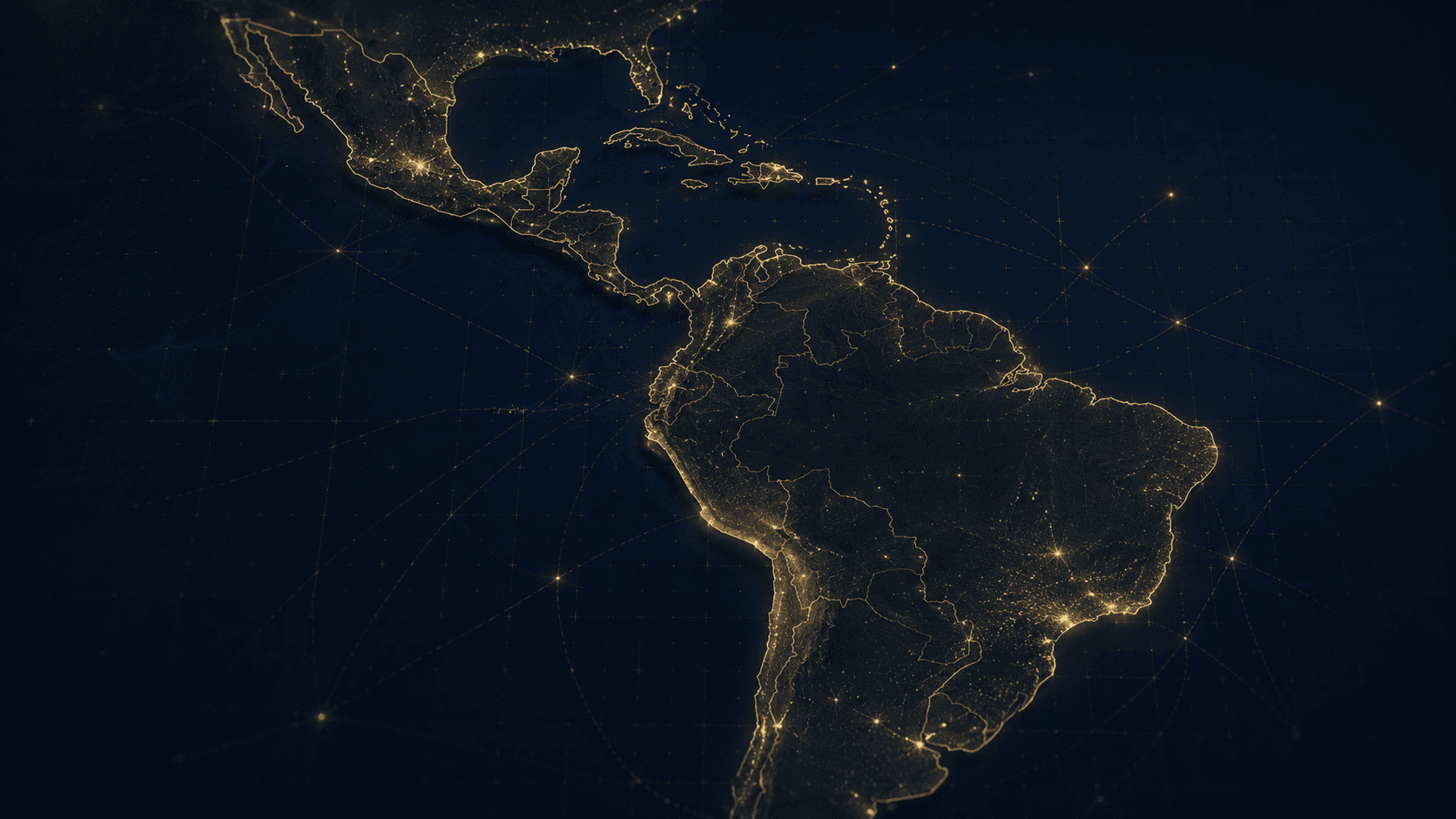
Latin America and the Caribbean continue to face a fast-moving security environment shaped by organized crime, political instability, migration pressure, public safety innovation, natural disasters, and shifting regional alliances.
This Secrisk LATAM Security Brief highlights several developments that may affect governments, private-sector operators, infrastructure stakeholders, multinational companies, and high-profile individuals with exposure across the region.
Haiti: Forward Operating Bases to Support Security Operations
The European Union and the Organization of American States have launched a €10 million initiative to construct five Forward Operating Bases in Port-au-Prince. The project is intended to strengthen the operational capabilities of the Haitian National Police as the country continues to confront gang violence and organized crime.
The bases are expected to increase police presence in high-risk areas and support efforts to secure territory recovered from armed groups. For regional security stakeholders, Haiti remains a critical watchpoint due to the continued strain on institutions, law enforcement capacity, humanitarian conditions, and international stabilization efforts.
Cuba: New U.S. Sanctions Target State-Owned Entities
The United States has imposed new sanctions on five Cuban state-owned companies and an individual connected to the Castro family. Several of the sanctioned companies are linked to GAESA, the military-connected business conglomerate accused by Washington of controlling major sectors of the Cuban economy.
The measures are part of a broader U.S. pressure campaign targeting Cuba’s energy, mining, defense, and financial sectors. These sanctions may affect foreign businesses operating in or around Cuba, particularly those exposed to mining, infrastructure, logistics, finance, or state-linked commercial activity.
Immigration and Regional Instability: TPS Protections for Haiti and Syria
The U.S. Supreme Court ruled that federal courts generally cannot review Department of Homeland Security decisions regarding Temporary Protected Status designations. The decision allows the termination of deportation protections for approximately 350,000 Haitian immigrants and 6,000 Syrian immigrants.
For the Caribbean region, this development is significant because Haiti’s internal security and humanitarian conditions remain fragile. Migration policy changes may create additional pressure on communities, families, humanitarian organizations, and regional governments.
Mexico-Linked Drone Smuggling Attempt in the United States
Two Mexican nationals were charged after allegedly attempting to use a drone to smuggle narcotics into a federal prison in Louisiana. Authorities recovered methamphetamine, marijuana, THC vape cartridges, cell phones, ammunition, and drone equipment.
This case reflects a broader trend: criminal groups are increasingly using low-cost technology, including drones, to support smuggling, surveillance, and contraband delivery. Security programs for correctional facilities, ports, logistics centers, critical infrastructure, and private estates should continue to account for drone-based threats.
Wildlife Trafficking and Organized Crime Networks
The Latin American Association of Zoos and Aquariums warned that illegal wildlife trafficking is increasingly moving through social media and e-commerce platforms. The illegal wildlife trade remains linked to broader organized crime networks involved in drug trafficking, arms trafficking, human trafficking, and money laundering.
For companies and institutions operating in Latin America, wildlife trafficking is not only an environmental issue. It can also indicate the presence of sophisticated illicit networks, weak enforcement environments, corruption risks, and money-laundering exposure.
Venezuela: Earthquake Response and Political Pressure
Two powerful earthquakes in north-central Venezuela reportedly caused major casualties and triggered a large humanitarian response involving international and local organizations. The disaster has become an important test for the government’s ability to coordinate emergency response, attract international assistance, and manage public frustration.
The earthquake also comes at a sensitive political moment. Analysts have noted that the response could affect the government’s legitimacy, especially if aid distribution is perceived as slow, corrupt, or politically motivated. For businesses and humanitarian operators, Venezuela remains a complex environment requiring careful security, logistics, and political-risk planning.
Peru: Electoral Appeals Rejected as Fujimori Lead Holds
Peru’s National Jury of Elections rejected additional appeals from Roberto Sánchez’s party, further strengthening Keiko Fujimori’s narrow presidential lead. With nearly all ballots processed, the result appears no longer mathematically reversible, though formal certification remains pending.
The situation should continue to be monitored for protest activity, political mobilization, and potential instability during the transition period. Companies with exposure to Peru should track both legal certification timelines and street-level reactions.
Uruguay: Drone Response and Armored Patrols in Montevideo
Uruguay is emerging as a notable case study in technology-enabled public safety. Authorities in Montevideo launched a program integrating autonomous drones with gunshot detection systems, allowing drones to respond rapidly to potential shooting scenes and transmit live video to command centers.
Separately, Uruguay announced the deployment of armored vehicles under police command to support operations in high-crime neighborhoods of Montevideo. While officials have emphasized that the measure does not represent a military role in domestic policing, the decision has generated debate over the use of military equipment in public security.
Together, these developments show how Latin American governments are experimenting with new tools to address urban violence, organized crime, and officer safety.
Bolivia: Political Crisis and Risk of Escalation
Former Bolivian President Evo Morales warned of possible civil conflict from his Chapare stronghold amid a prolonged political crisis marked by protests, roadblocks, and shortages of food, fuel, and medicine.
Bolivia’s current environment presents heightened risks around political mobilization, transportation disruption, supply-chain interruption, and social unrest. Organizations operating in Bolivia should maintain updated contingency plans, movement protocols, and monitoring of roadblock activity.
Colombia: Security Alignment with the United States
Colombia’s president-elect announced that the country will join the U.S.-led “Shield of the Americas” initiative upon taking office. The coalition is intended to strengthen regional cooperation against drug cartels and transnational organized crime.
This would represent a significant shift in Colombia’s security posture and may lead to closer cooperation with Washington on counternarcotics, border security, intelligence sharing, and organized crime disruption. Security stakeholders should monitor how this policy shift affects Colombia’s domestic security environment and regional relationships.
Key Takeaways for Clients and Regional Operators
The current LATAM security environment is being shaped by five major themes:
1. Organized crime continues to adapt through technology, including drones, online marketplaces, and cross-border networks.
2. Political transitions and disputed elections remain important sources of instability in countries such as Peru, Bolivia, Colombia, and Venezuela.
3. Public security forces are increasingly adopting advanced tools, including drones, sensors, command-center integration, and armored mobility.
4. Natural disasters can quickly become political and security challenges when government response capacity is limited or public trust is low.
5. U.S. regional policy continues to influence sanctions, migration, counternarcotics cooperation, and security partnerships.
Secrisk International will continue monitoring developments across Latin America and the Caribbean, with attention to how these events may affect corporate security, executive protection, critical infrastructure, travel risk, and regional operations.
Disclaimer: This article is based on open-source reporting and regional news monitoring. It is provided for informational and risk-awareness purposes only and does not constitute legal, financial, or political advice.
LINKS USED FOR ARTICLES Construction of five advanced operational bases in Port-au-Prince https://www.haitilibre.com/article-47826-security-construction-of-5-forward-operating-bases-in-port-au-prince-haiti.html
U.S. sanctions five Cuban entities, Castro family member https://www.upi.com/Top_News/US/2026/06/24/2431782282151/
Supreme Court lets US end Haiti, Syria immigrant protections https://rollcall.com/2026/06/25/supreme-court-lets-us-end-haiti-syria-immigrant-protections/
2 from Mexico charged in drone drug-smuggling attempt at Pollock prison https://www.kalb.com/2026/06/25/2-mexico-charged-drone-drug-smuggling-attempt-pollock-prison/
Latin America zoos warn illegal wildlife trade moving to social media https://www.upi.com/Top_News/World-News/2026/06/25/2471782406357/
How to help victims of deadly Venezuela earthquakes https://abcnews.com/International/victimsdeadly- venezuela-earthquakes/story?id=134202867
How will Venezuela’s earthquake affect Delcy Rodríguez’s government? https://acleddata.com/expert-comment/how-will-venezuelas-earthquakes-affect-delcy-rodriguezsgovernment
Peru’s electoral board rejects 23 more appeals by Sánchez’s party as Fujimori’s win holds https://en.mercopress.com/2026/06/25/peru-s-electoral-board-rejects-23-more-appeals-by-sanchez-sparty- as-fujimori-s-win-holds
Hear a gunshot? In this city, drones respond before police https://dronedj.com/2026/06/24/uruguay-drone-gunshot-flytbase-dfr/
Evo Morales warns of civil war from Chapare stronghold: ‘I will not surrender’ https://www.euronews.com/2026/06/24/evo-morales-warns-of-civil-war-from-chapare-stronghold-i-willnot- surrender
Uruguay to deploy army armored vehicles to patrol high-crime Montevideo neighborhoods https://en.mercopress.com/2026/06/24/uruguay-to-deploy-army-armored-vehicles-to-patrol-high-crimemontevideo- neighborhoods
De la Espriella says Colombia will join the US-led ‘Shield of the Americas’ on August 7 https://en.mercopress.com/2026/06/23/de-la-espriella-says-colombia-will-join-the-us-led-shield-of-theamericas- on-august-7